What Is the Albumin Correction Factor for Anion Gap?
This albumin correction factor for anion gap is a way to modify the anion gap when albumin is low. Because albumin is a key unmeasured anion in the blood, hypoalbuminemia can make the gap look reduced than it really is. A reliable Anion Gap Calculator can apply this adjustment so the result more accurately reflects the patient’s true acid-base disorders status.
The standard correction is 2.5 mEq/L per 1 g/dL albumin under the usual serum albumin reference range. Put simply, if albumin is decreased, the corrected anion gap increases to compensate for the missing negative charge from albumin and support laboratory interpretation.
What Is the Anion Gap?
The anion gap is a computed value that helps medical professionals interpret serum electrolytes and check for acid-base problems. It is typically calculated using serum sodium, serum chloride, and serum bicarbonate. The classic formula is:
Anion gap = sodium − (chloride + bicarbonate)
This value shows the gap between routinely measured positively charged ions and negatively charged ions in the blood. In blood chemistry, a normal gap implies balanced unmeasured ions, while an abnormal gap can signal a metabolic derangement. The anion gap is most often used in acid-base evaluation to help identify metabolic acidosis, especially when the cause is not obvious from the initial lab results.
Understanding the gap requires more than memorizing a formula. It also helps to know that the gap is influenced by unmeasured ions, especially protein anions such as albumin. That is why the measured value can shift even when the clinical situation has not changed for the better or deteriorated.
The Reason Albumin Alters the Anion Gap
Albumin is the primary negatively charged protein in plasma. Because it contributes many protein anions, it has a strong effect on electrolyte balance and the measured anion gap. When albumin decreases, the body loses some of those unmeasured negative charges, so the anion gap may also decrease.
That is why hypoalbuminemia can mask an underlying acid-base problem. A patient may appear to have a normal gap even when there is actually a high-gap disorder present. That can lead to missed hidden acidosis unless the albumin level is evaluated.
Albumin matters because acid-base chemistry is about charge balance. If fewer albumin molecules are present, fewer negative charges are in the plasma. The result is a reduced measured gap, even though the true acid-base balance may be abnormal. This is one of the key reasons to incorporate albumin into diagnostic interpretation.
Understanding the albumin correction factor?
The albumin correction factor is the amount added to the measured anion gap to account for low serum albumin concentration. The common adjustment formula uses 2.5 mEq/L for every 1 g/dL decrease in serum albumin below the standard reference level, often taken as 4.0 g/dL.
In practice, the formula is often written as:
Corrected anion gap = measured anion gap + 2.5 × (4.0 − serum albumin)
This adjustment approximates what the gap would look like if albumin were at normal levels. It transforms a observed value into a more clinically meaningful refined value. For many clinicians, this improves clinical usefulness when evaluating acid-base disorders and deciding whether further workup is needed.
The key point is that the correction is an approximation, not a perfect truth. Still, it is widely used because it improves test result interpretation, especially when the albumin level is clearly below the usual normal range.
How to Correct the Anion Gap for Albumin
Adjusting the anion gap is straightforward once you know the measured anion gap and the serum albumin level. The process is simple to apply in a clinical tool or by hand.
Steps for calculation:
- Determine the measured anion gap from sodium, chloride, and bicarbonate.
- Review the serum albumin value and make sure the units are in g/dL.
- Subtract the albumin from 4.0 g/dL, if 4.0 is the reference point being used.
- Apply that difference by 2.5 mEq/L per 1 g/dL albumin.
- Combine the result to the measured anion gap.
Calculation example:
If the measured anion gap is 10 mmol/L and serum albumin is 2.0 g/dL:
Correction = 2.5 × (4.0 − 2.0) = 5.0 mEq/L
Corrected anion gap = 10 + 5 = 15 mmol/L
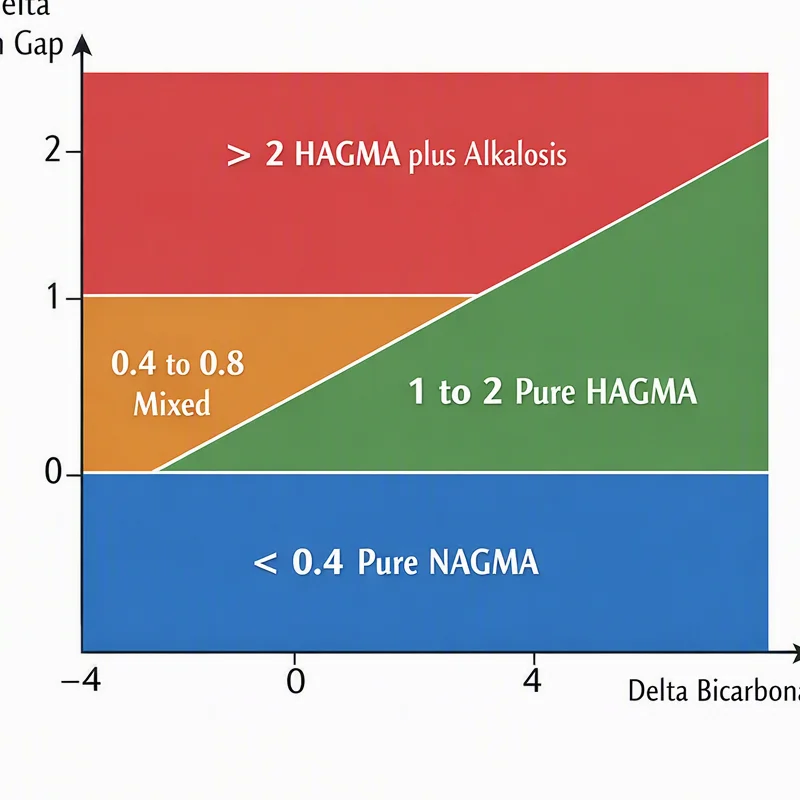
This demonstrates why unit conversion matters. Although the correction is often written as mEq/L, the anion gap is commonly reported in mmol/L, and many labs use the terms interchangeably in this context. The essential step is to keep units consistent and understand how the calculator handles them.
A good Anion Gap Calculator streamlines this process and reduces calculation errors. It can also support quicker medical calculator use at the point of care, where quick clinical interpretation is often essential.
When to Use an Anion Gap Calculator
An Anion Gap Calculator is particularly useful when you are reviewing lab values in a patient with low albumin or uncertain acid-base changes. It connects routine chemistry results with a clearer acid-base picture.
Use a calculator when:
- Albumin is below normal and you want an albumin-adjusted anion gap.
- You suspect metabolic acidosis but the gap appears normal.
- The clinical picture suggests acid-base evaluation is incomplete without correction.
- You want a quick diagnostic interpretation at the bedside or during chart review.
The calculator is particularly valuable https://anion-gap-help366.lucialpiazzale.com/how-to-apply-an-anion-gap-calculator-for-blood-gas-analysis in admitted patients, critically ill patients, and anyone with fluctuating protein levels. In these settings, the measured value may not reflect the true corrected value. By adjusting for albumin, the calculator improves clinical utility and can identify a metabolic problem that would otherwise be overlooked.
Typical Causes of a Elevated or normal anion gap
When reviewing metabolic acidosis, the anion gap helps differentiate between high anion gap metabolic acidosis and normal anion gap metabolic acidosis. A corrected result can alter your reading from one type to another.
Typical causes of high anion gap metabolic acidosis include:
- Lactic acidosis
- Acidosis from ketones
- Kidney failure
- Other forms of acid retention or poison exposure
In lactic acidosis, elevated lactate adds unmeasured anions to the blood. In ketoacidosis, ketone bodies elevate the gap. In renal failure, stored acids collect and increase the anion gap.
A normal result does not always exclude a high-gap process if albumin is low. That is where the albumin correction factor becomes medically important. By correcting for hypoalbuminemia, you may detect a true high-gap state that was hidden by a deceptively normal result.
Frequent Mistakes in Protein Correction
Many errors can weaken the benefit of albumin correction in daily laboratory interpretation. Some of these are basic, but they can lead to major interpretation errors.
Common mistakes include:
- Applying the wrong measurements for albumin or the anion gap
- Applying the wrong normal range for serum albumin
- Ignoring that the correction is only an estimate
- Failing to consider other electrolyte abnormalities
- Interpreting the corrected anion gap without considering the full clinical picture
A further common issue is overlooking related chemistry results such as free calcium. Even though ionized calcium is not part of the formula, it can be important in the broader evaluation of acid-base and electrolyte disorders. The same is true for other markers that affect interpretation of the patient’s condition.
Keep in mind that a corrected anion gap should not replace clinical judgment. It is a tool that improves clinical interpretation, not a standalone diagnosis. Carefully consider the full pattern of blood electrolytes, symptoms, and context.
FAQ About Albumin Correction and Anion Gap
Does low albumin always mean the anion gap is falsely low?
No, it does not. Low albumin often lowers the anion gap, but not every low value is misleading. The effect depends on the degree of albumin reduction, the overall gap interpretation, and the rest of the lab pattern. Low albumin can create false-normal results or make a truly abnormal gap appear less impressive, which is why correction is helpful.
What correction factor is most commonly used?
The most common correction uses 2.5 mEq/L for every 1 g/dL drop in albumin level below about 4.0 g/dL. This produces an albumin-corrected anion gap that better reflects the patient’s acid-base status.
Can the corrected anion gap change diagnosis?
Yes. In some patients, correction can reveal metabolic acidosis that was hidden by low albumin. This may expose occult acidosis and affect clinical decision-making, especially when deciding whether to investigate causes such as lactic acidosis, ketoacidosis, or renal failure.
What is the albumin correction factor for anion gap?
The albumin correction factor is usually 2.5 mEq/L per 1 g/dL albumin below the standard reference value. It is added to the measured anion gap to estimate a more precise corrected anion gap when albumin is low.
Why does low albumin decrease the anion gap?
This protein holds negative charge as a leading protein anion components in blood plasma. As albumin decreases, the blood has fewer unmeasured anions, so the measured anion gap falls. This may affect acid-base assessment unless an adjustment is made.
How do you calculate the anion gap correction?
Use the measured anion gap and add 2.5 times the gap between 4.0 g/dL and the actual serum albumin. The formula is simple: corrected anion gap = measured anion gap + 2.5 × (4.0 − serum albumin). This provides a helpful calculation example for any medical calculator or manual check.
What’s the most common adjusted value used for albumin?
The most frequently used adjustment is the 2.5 mEq/L per 1 g/dL albumin correction. It is commonly used because it provides a useful estimate for the albumin-adjusted anion gap and supports diagnostic interpretation in patients with low albumin levels.
At what point should a corrected anion gap be interpreted clinically?
Interpret the corrected anion gap when low albumin levels could be masking an acid-base problem, especially in suspected metabolic acidosis. It is most clinically useful when reviewing lab result interpretation in patients with unexplained illness, critical disease, or possible hidden acid accumulation.