What Represents a Below-normal Anion Gap and What Does It Mean?
What Represents the Anion Gap?
The anion gap is a computed value used in blood chemistry to evaluate electrolytes and overall acid-base balance. It is not directly recorded on a blood test; instead, it is derived from key values such as sodium, chloride, and bicarbonate. Clinicians use it as a helpful diagnostic clue when evaluating an electrolyte imbalance or an acid-base disorder.
In plain terms, the anion gap reflects the difference between the positively charged ions and the negatively charged ions measured in a standard serum test. Because the body must maintain charge balance, a change in the calculated value can suggest changes in protein levels, unmeasured ions, or a shift in the body’s chemistry. That is why an abnormal anion gap can be an abnormal finding that deserves attention in the right clinical context.
Most people first hear about this number when a clinician reviews a reference range on an electrolyte panel or basic metabolic panel. The result can help point toward conditions such as metabolic acidosis, but it can also be misleading if the underlying blood chemistry is affected by a false low result or other testing issues.
How an Anion Gap Calculator Works
An anion gap calculator uses values from a routine laboratory sample to calculate the gap. In most formulas, the https://anion-gap-formula266.raidersfanteamshop.com/why-starvation-ketoacidosis-alters-the-anion-gap calculator contrasts sodium with chloride and bicarbonate. The exact equation may differ a little by lab, but the idea is the same: it produces a calculated value from the measured electrolytes.
Many labs list the values in mEq/L, which stands for milliequivalents per liter. A typical serum test may cover sodium, chloride, and bicarbonate on a basic metabolic panel or broader electrolyte panel. Once those numbers are entered, the anion gap calculator can show whether the result falls within the expected reference range or whether it appears unexpectedly low or negative.
That is important because the number itself is not a diagnosis. It is a screening tool that can reveal a pattern needing interpretation. For example, a slightly odd result may be due to a simple reporting issue, while a major change may reveal a real acid-base disorder. This is why a calculator should always be used with clinical context, not in isolation.
In practice, the calculator helps you see whether the difference between the measured ions suggests a stable result or an unexpected result. When the number is negative, the result is unusual enough that it often triggers a closer look at the lab method, the sample, and the patient’s overall condition.
What Does a Negative Anion Gap Mean?
A negative anion gap indicates the calculated value is below zero, which is unexpected in routine analysis. Because the body’s measured cations and anions should normally balance within a small margin, a negative number often raises suspicion for lab error or another testing issue before it suggests disease.
One first considerations clinicians consider is whether there was a measurement error. This may happen if one electrolyte was reported incorrectly, if the sample was contaminated, or if the instrument generated a low false result. In numerous cases, the apparent negative value is not a true reflection of the patient’s biology.
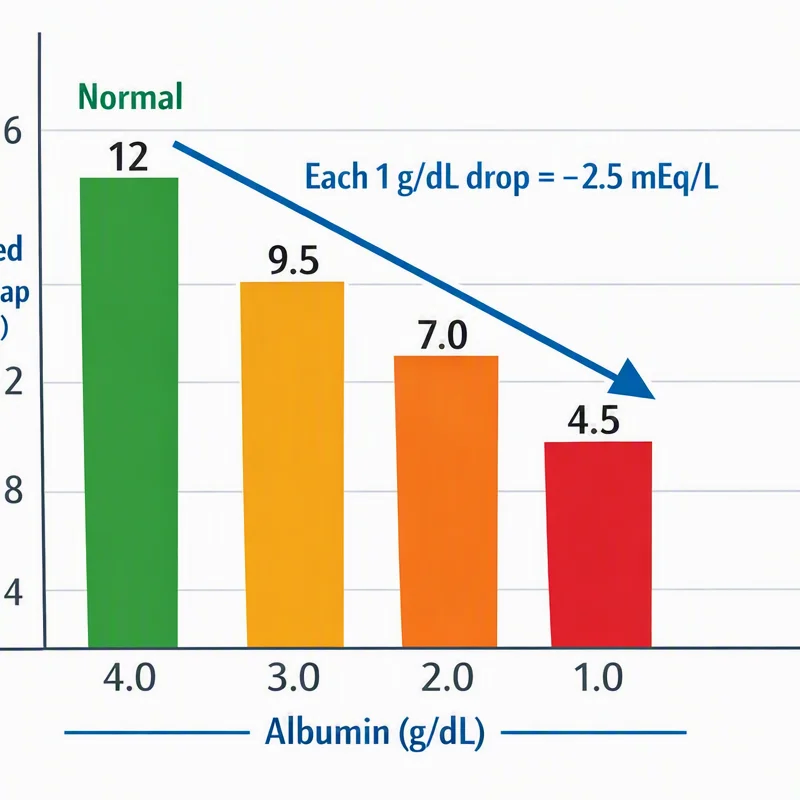
One more significant possibility is serum albumin being found below than expected. Because albumin is a major negative protein, reduced albumin can alter the anion gap. Hypoalbuminemia may decrease the gap and turn a standard or mildly abnormal result look more worrisome. It is one reason clinicians assess the number alongside protein levels and other lab values.
A low anion gap can be associated with paraproteinemia, a disorder in which unusual proteins move in the blood. One classic example is multiple myeloma, where unusual monoclonal proteins may change the chemistry enough to change the calculated value. In that setting, the anion gap may serve as a clue rather than a standalone diagnosis.
Therefore, although a normal result is unusual, it does not necessarily mean advanced illness. It indicates the result needs thorough lab interpretation and correlation with the overall clinical picture.
Frequent Causes of a Low Anion Gap
A number of factors can lead to a negative anion gap, and the most common are not dangerous. The first category is simple testing or reporting problems. A lab error, sample mix-up, or measurement artifact can distort sodium, chloride, or bicarbonate enough to create a low number.
A further major cause is hypoalbuminemia. Since serum albumin contributes to the normal balance of charged particles, low albumin can lower the anion gap. In a patient with poor nutrition, inflammation, liver disease, or chronic illness, the result may reflect low albumin rather than an acid-base emergency.
Some substances can also interfere with measurement. Bromide exposure is a classic example. Because bromide may be detected incorrectly as chloride by some assays, it can create an apparent high chloride reading and push the anion gap downward. This is one form of toxic exposure that can alter lab interpretation.
Lithium is another important cause. In patients taking lithium, especially if levels are elevated, the extra unmeasured cation can contribute to a low or negative gap. In that setting, the anion gap may be a useful screening test that hints at medication-related chemistry changes.
In rare cases, elevated magnesium or calcium can influence the calculation as well. These changes are less common than hypoalbuminemia or lab artifact, but they are still part of the differential diagnosis when reviewing an unexpected result.
In clinical practice, the leading causes often fall into three broad groups:
- Laboratory problems such as lab error or measurement artifact
- Albumin-related changes such as hypoalbuminemia or paraproteinemia
- Drug or exposure effects such as bromide or lithium
Could a Below-zero Anion Gap Become Harmful?
A below-zero anion gap can be innocuous, but it can also be a clue to an important issue. The primary question is whether it reflects a real acid-base disorder or a measurement problem. If the result is due to lab error or measurement artifact, it may have minimal immediate clinical importance. If it reflects an underlying condition, however, it may point to a manageable problem.
For example, in someone with metabolic acidosis, the anion gap is often used to identify the cause of the disturbance. A below-zero result does not fit the usual pattern and may suggest that the blood chemistry data are partial or skewed. In that case, the negative number is less about the disease itself and more about the reliability of the calculated value.
Some causes do carry real importance. Paraproteinemia, including multiple myeloma, may indicate a significant underlying disorder that requires medical evaluation. Likewise, lithium or bromide exposure may point to toxicity or an interaction that needs prompt attention.
The key issue is clinical significance. A negative gap should not be ignored, but it should also not be treated as proof of a major disease by itself. Instead, it should trigger careful review of the patient’s symptoms, medications, albumin level, and related lab values.
A negative anion gap is often a clue, not a diagnosis. The meaning depends on whether the result is real, repeatable, and consistent with the rest of the lab data.When to Repeat Labs or Follow Up
Because a negative anion gap may arise from a temporary issue, a repeat test is often the most practical step. Rechecking the result can help determine whether the value was a transient false low result or a recurrent pattern. If the repeat value normalizes, the original finding may have been a screening test artifact rather than a true disorder.
Providers often check the full basic metabolic panel or electrolyte panel to see whether sodium, chloride, and bicarbonate fit together. If the numbers do not fit the patient’s symptoms or other results, the lab may be asked to verify the sample or re-run the test. This type of physician review is especially important when the result is unexpected.
Follow-up may be more urgent if there are indications of medication toxicity, suspected exposure, or unexplained illness. If bromide, lithium, or another substance is possible, the negative anion gap may be one part of a broader medical evaluation. If albumin is low, the next step may involve checking nutritional status, liver function, inflammation, or kidney-related issues affecting serum albumin.
Put simply, the next step depends on the pattern. A single unusual number in an otherwise normal panel may simply need confirmation. A repeated abnormality, especially with symptoms or other lab changes, calls for more detailed assessment.
FAQ: Negative Anion Gap Questions
What does it mean to have a negative anion gap?
A negative anion gap represents a calculated value less than zero on a lab report. Since the anion gap is based on sodium, chloride, and bicarbonate, a negative number usually suggests an atypical laboratory pattern, a measurement artifact, or a condition affecting serum albumin or other blood components.
Is a negative anion gap always a lab error?
No. Although lab error is a common explanation, a negative anion gap can also occur with hypoalbuminemia, paraproteinemia, bromide exposure, or lithium use. The result should be interpreted in clinical context and often confirmed with repeat testing.
Which conditions can cause a negative anion gap?
Common causes include hypoalbuminemia, abnormal proteins seen in paraproteinemia and multiple myeloma, drug or toxin effects such as bromide or lithium, and analytical issues like measurement artifact. Less commonly, changes in magnesium or calcium may contribute.
How do you determine the anion gap?
An anion gap calculator typically uses values from a blood test or electrolyte panel. The calculator compares measured sodium with chloride and bicarbonate to create a calculated value. The exact formula may vary by lab, so results should be interpreted using the local reference range.
When should a negative anion gap be repeated or checked by a doctor?
If the result is unexpected, if there are symptoms, or if the result does not match the rest of the blood chemistry, it should usually be checked again. Repeat testing, review of the basic metabolic panel or electrolyte panel, and physician review are appropriate when there is concern about a real acid-base disorder, toxic exposure, or another cause that needs medical evaluation.